July 22, 2026

min read
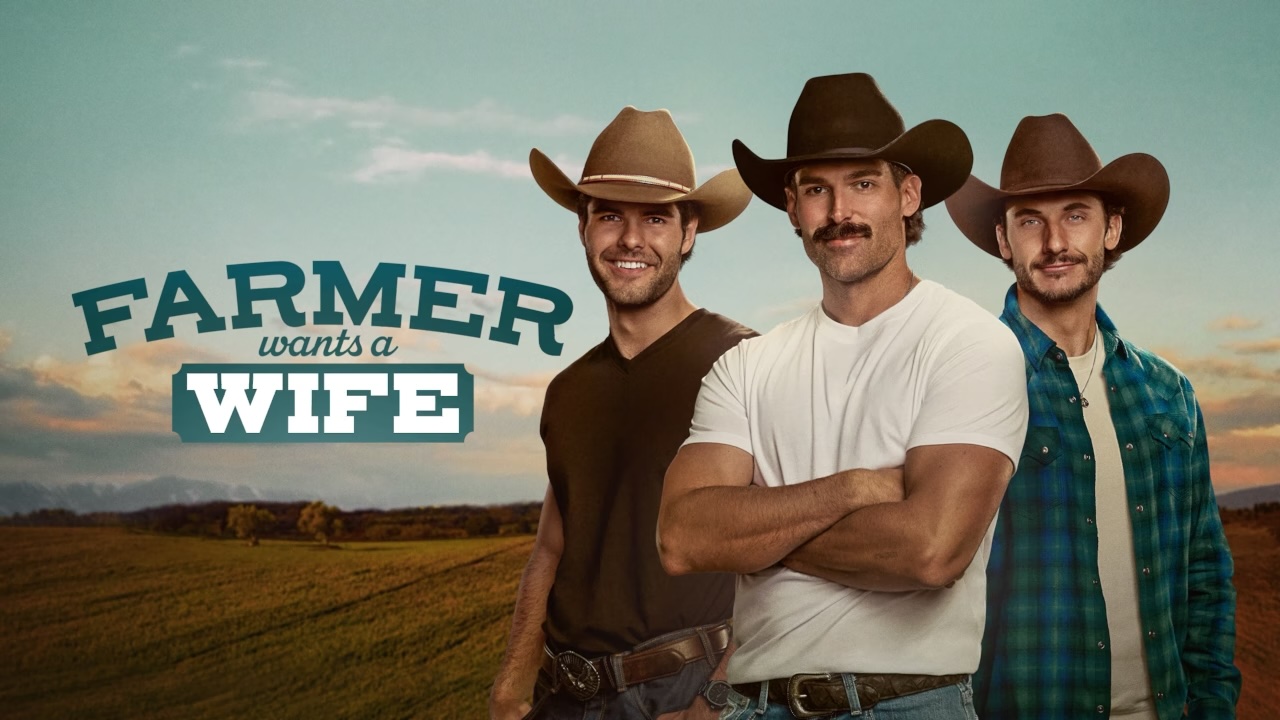
For more than two decades, Damon Collazo has built a reputation as one of reality television's premier casting directors. Through Collazo Casting, he has helped discover unforgettable personalities for hit series including Farmer Wants a Wife, The 1% Club, Joe Millionaire: For Richer or Poorer, Mental Samurai and more.
Behind every successful casting reel, however, lies an enormous amount of unseen work.
A single series can attract thousands of applicants. Every promising candidate is interviewed, reviewed, and edited into concise casting reels for network executives. While casting decisions move quickly, the editorial process rarely does.
"It's not unusual for a 90-minute interview to require three hours or more of editing before it's ready for review," says Collazo. "And as production budgets continue to tighten, that bottleneck only becomes more difficult."
Like many television professionals, Collazo wasn't actively looking for AI to solve the problem.
It was his wife and casting partner, Sandra Petko Collazo, who first suggested taking a closer look at Quickture.
Initially, he had reservations.
Beyond wondering whether AI could actually understand great storytelling, he worried about its impact on the editors he had worked alongside for years.
"I wasn't interested in replacing editors," he explains. "They're an essential part of our process."
Everything changed after Collazo tested Quickture on a single interview.
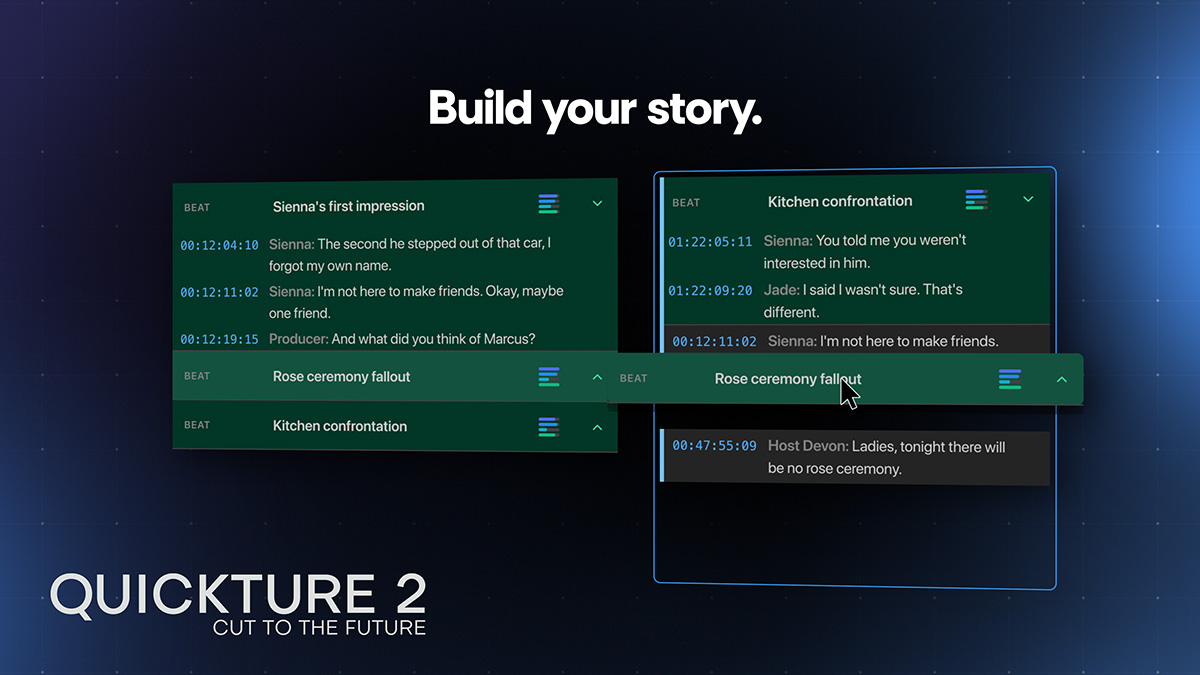
He imported approximately ninety minutes of raw footage—material that traditionally required roughly three hours of editorial labor to create a usable string-out.
Twenty minutes later, Quickture had assembled a polished 25-minute sequence highlighting the strongest moments from the interview.
That was the breakthrough.
Rather than replacing an editor, Quickture had effectively replaced the tedious first pass: logging footage, identifying compelling moments, and assembling a thoughtful foundation for the creative edit.
"It handles the heavy lifting," Collazo says. "Instead of spending hours digging through footage, our editor can immediately focus on shaping the story."
Collazo didn't simply trust the results—he tested them.
Knowing exactly which moments he considered essential during an interview, he developed custom prompts and challenged Quickture to identify the same beats.
Again and again, it surfaced not only the obvious highlights, but many of the subtle emotional moments that make reality television compelling.
"It wasn't perfect," he says, "but it consistently found the moments I knew mattered. Then our editor could take those scenes and do what editors do best—let them breathe, refine the pacing, and elevate the storytelling."
For Collazo, that distinction is critical.
Quickture accelerates the mechanical work. Editors remain responsible for the creative work.
One of Collazo's biggest concerns quickly disappeared once his editor began using the platform.
Instead of spending entire days screening raw interviews, the editor could begin working immediately on crafting stronger, more polished casting reels.
"Nobody enjoys spending hours just pulling selects," Collazo says. "When you watch raw footage all day, it's easy to go on autopilot and even miss great moments."
What once required a full day of reviewing and trimming multiple interviews could now be spent refining edits, improving pacing, and preparing presentations for the network.
The improvement didn't go unnoticed.
After reviewing recent casting reels, one network executive remarked:
"These are the slickest edits we've ever seen."
Collazo is quick to credit the collaborative workflow.
"That's Quickture, our editor, and me as producer—all working together. The technology didn't replace anyone. It simply allowed all of us to spend more time doing our best work."
With thousands of applicants arriving for each season of Farmer Wants a Wife, speed and quality have never been more important.
Each candidate still needs a compelling three-minute casting reel that captures personality, humor, emotion, and story.
For Collazo Casting, Quickture has become an integral part of making that possible.
"It allows us to maintain the quality we're known for while handling the volume today's productions demand."
Collazo understands why AI makes many creative professionals uneasy.
But after integrating Quickture into his workflow, he sees it differently.
Rather than replacing creativity, it removes the repetitive work that keeps creative teams from doing their highest-value work.
For Collazo, that's where the future of post-production is headed: AI handling the labor-intensive first pass, while talented editors and producers focus on storytelling.
And that's exactly where they belong.
Damon Collazo is a supervising casting producer and casting director with more than twenty years of experience in unscripted television and more than 100 production credits. Together with Sandra Petko Collazo (Supervising Casting Producer), they lead Los Angeles-based Collazo Casting, whose clients include major broadcast networks and streaming platforms. The company has cast acclaimed series including Farmer Wants a Wife, The 1% Club, Joe Millionaire: For Richer or Poorer, Mental Samurai and more, earning a reputation for discovering authentic, memorable personalities that audiences connect with.